KM Asia 14 Rudolf and Dave Snowden

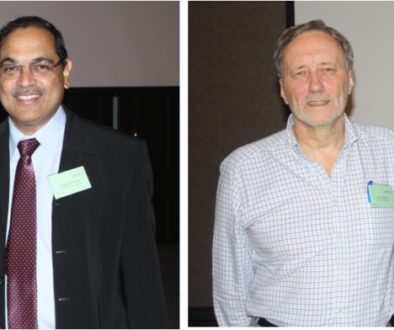
With Dave Snowden at KM Asia 2013
A (K)November to Remember…..interactions with Dave Snowden.
Continuing from the earlier blog, this time I would like to write about some of the Heavyweights from the KM World whom I had the good fortune of meeting at KM Asia 2103…… Again, there is no particular order in which I write about them. Here I focus on a person I admire a lot- Dave Snowden.
- Dave Snowden: I first ran into Dave Snowden at KM Asia way back in 2005. I was a fledgling in the KM field. I had been sent to the conference by the organization I was working for, as a reward for the success of the ‘Knowledge Olympics’. On learning about the program, Dave on the fly, used it as a case study to explain how the program tapped into the organization ‘Social Networks’; how ‘Boundary Conditions’ rather than strict rules helped improve the engagement; how the timing with the real Olympic Games created a ‘resonance’ that amplified the impact. By the way, I was not conscious of any of the techniques he spoke off, and the design of the Knowledge Olympics was purely coincidence. With Dave giving me so much attention is no wonder that I began came Dave’s ardent follower. I met Dave a couple of times thereafter at subsequent conferences including the India KM Summit a couple of years back
I must confess that when Dave speaks, it goes directly to my intellect. There is no other way for me to describe what happens. I find it difficult to take notes, and can only relate what he speaks to what has been experienced. At KM Asia 2013, as the co-chair for the conference, I was forced by my role to prepare a summary of his Keynotes. So here goes- I share the summary of the first Keynote – ‘Beyond Big Data or The Limits of Silicon over Carbon’:
(DISCLAIMER- there is a context to his speech, and so the summary given below, without the context, can be misconstrued; Dave has put up his keynote at KM Asia here: Dave Snowden KM Asia Keynote
- Unless KM addresses Business Issues/ Propositions- it will not be succeed in the long run and be accepted in an organization.
- KM needs to be for Decision Support and Innovation
- Big Data cannot be used for Pre-emptive work…can only analyse what has occurred- not WHY!
- Create a Human Sensor network using employees and customers, SUPPORTED by Technology- will create the required DENSITY!
- Does not believe that people will share knowledge across silos on a consistent basis
- Need to create Process, structure and architecture for this to happen; motivation and attitude alone will not help
- Technology augments Human Intelligence and cannot replace it; what the brains is good at, technology is not and vice versa
- Human beings are pattern based intelligences; Technology scans ALL the data
- Pattern based thinking leads to rapid decisions- good in an emergency;
- But it has its downside- people revert to patterns they have learnt (pattern entrainment)- which may not be relevant in some contexts; thus successful companies cannot think differently and nimble competitors race ahead (autonomic response)
- Corollary: your brain is not necessarily your friend
- KM programs on the other hand stimulate the Novelty Receptive Response
- Difficult to get people to think differently- people go with the flow
- You need to make people uncomfortable before they begin to think differently
- Extrinsic rewards destroy intrinsic motivation
- Cognitive Diversity is required not alignment- else strategic surprise will get you.
- The problem is that most KM initiatives focus on making all knowledge EXPLICIT; some forms of knowledge cannot be transferred EXPLICITLY- like Medical, Legal etc- hence APPRENTICESHIPs are still key in certain fields.
- So KM needs to address ALL FORMS OF KNOWLEDGE
- Myths and Story(telling) embody and define organization culture- important to share stories
- Human brains learn to create abstractions rather than focussing on all the data; hence metaphors and stories work; across multiple languages and cultures
- ‘Commanding communications’ in organizations; collect positive and negative stories
- Challenge how ‘Negative Stories’ can be reduced and more ‘Positive stories’ grow
- Can be initiated at all levels of hierarchy and ability
- Cannot be manipulated as these are reality
- People learn more from Failures rather than success- learn to scan more information; simulations with successive rounds of failures show that people learn more
- Negative Stories provide more learning; do not suppress them
- In ‘learning’ failure is key
- Human Pheromones’ are key to ‘Trust’; hence getting people to work physically together are important
- Focus on the process on how people interact with each other- rather on INDIVIDUAL capability building. Good for knowledge transfer
- Tools are important to cognitive development; similarly in KM- shift focus from Application to ‘co-evolutionary Architecture’. KM should be like ‘scaffolding’- to be removed once the structure can sustain on its own.
- When you bring in tools from the outside world keep in mind why it works rather than just blindly implementing; example- ‘Wiki’s need scale of editors; organizations do not have large number of editors; so to gather scale run something like a blog storm’….